December 2025: I can see the trees now
What a day, what a month, what a year

It’s the last day of December and the last day of 2025. This dispatch is late yet still on time as long as I get it out to you all before the clock strikes midnight. I’m planning to be watching a movie with Pen by then so I’ve got to get this (and two more Aanab recap newsletters??) done ASAP.
Publishing during the holidays is rough. Unlike last year when I hated the cheer that stifled our recovery from the war’s 66-day escalation, this December I left the house and made lots of PLANS. The anger is still inside me but it has morphed into some other form of black tar that clings to my lungs. Sometimes I cough it up and sometimes I just swallow another hit that will coat my air sacs with a fresh layer.
Last month, I wrote about how we got “permission” to retrieve tree trunks from my grandparents’ house in the South. They were eventually brought to a parking lot in Beirut so we could assess their condition and figure out what to do with them.
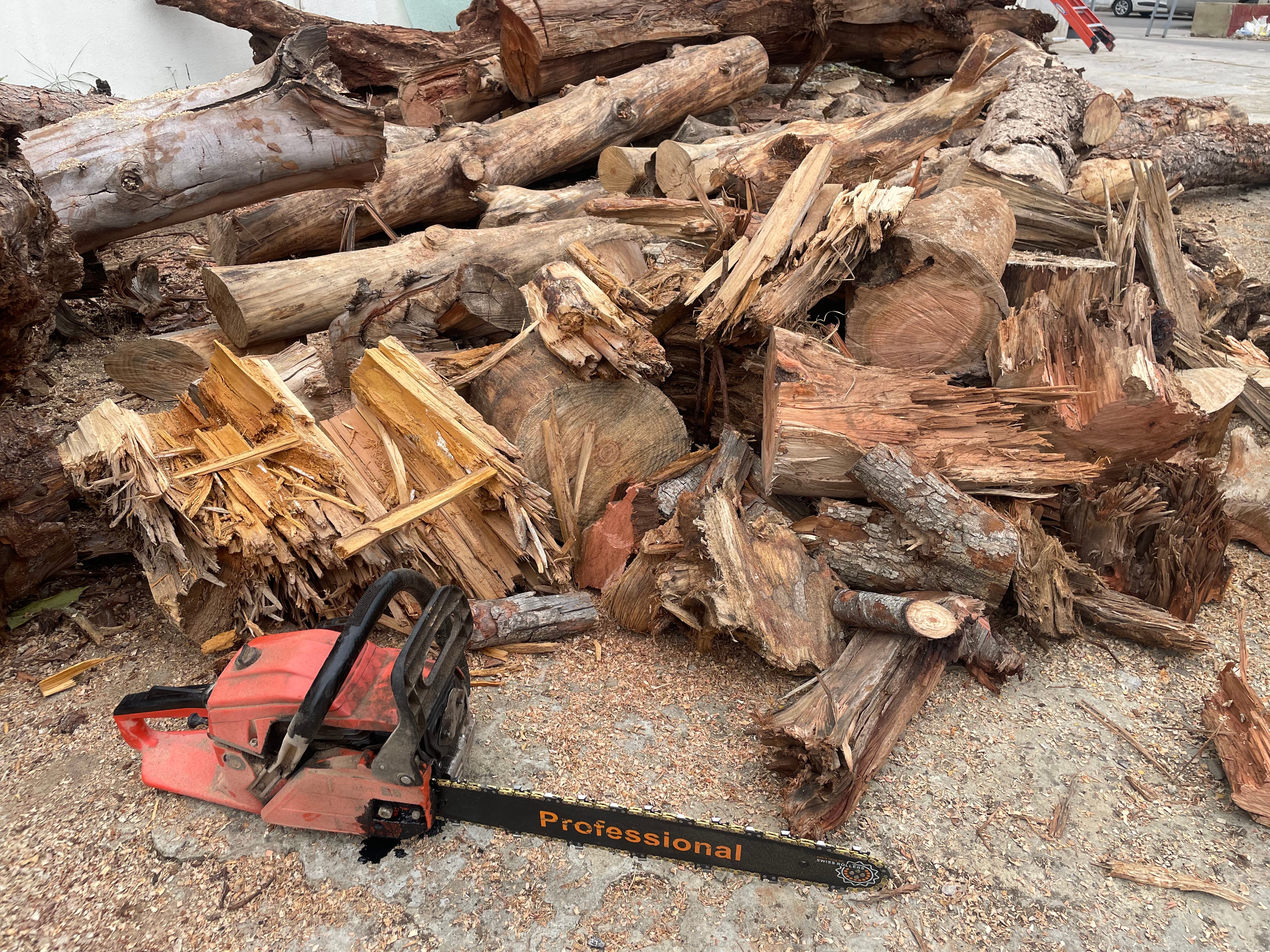
Huge eucalyptus, pine, and olive trunks were stacked horizontally across the lot. When you can walk along their fallen height, you can appreciate their true size. The thin ones were being cut by a chainsaw into logs for the soubia (a removable fireplace that’s powered by wood or diesel). The larger ones were destined for greater things: a table, a pillar, a bookcase. My dad and my uncles watched as the chainsaw diced what was left of their parents and their village. Rah w nahna ray7een, said one of them.
I took pieces of bark and twigs. I filled a plastic bag with dirt that was caked on the roots of one of only three olive trees. I’ve never taken so many pictures of logs.
The trunks were dotted with tiny holes. I worried if it was shrapnel at first but then I saw that the tiny dots were everywhere. My dad’s cousin told me they were msaowseen. Infested. Of course. They had been lying in the elements (heat, rain, snow, and more Zionist violence) for over two years. I’m surprised those were the only visible wounds.
Kasaritleh dahreh said my uncle. It broke my back, the war that is. They all absentmindedly spoke to me as they watched the peach sawdust emerge. Israel can’t just do this, they can’t just do what they want with the South.
I stood there and then the cousin started talking to me. I wanted to record these unexpected confessions but I didn’t want to disrupt their candor with an injection of technology. At the same time, I wanted to record how I was feeling too because I didn’t know what this tar was made of yet. I discretely sent WhatsApp texts to myself to chew on later.
I learned that the yellow, ochre stones of the house were from Beit Mery/Mansourieh and not Arsal as I had originally been told. I thought of a past video where I said that now incorrect information in my narration.
“Are you sure?” I asked.
Yes, you can’t get those stones from there anymore.
And then I realized that when we were displaced during the war, we stayed in the same area that the stones of the house were from. We were there at the same time that the stones were blown up by the Israelis.
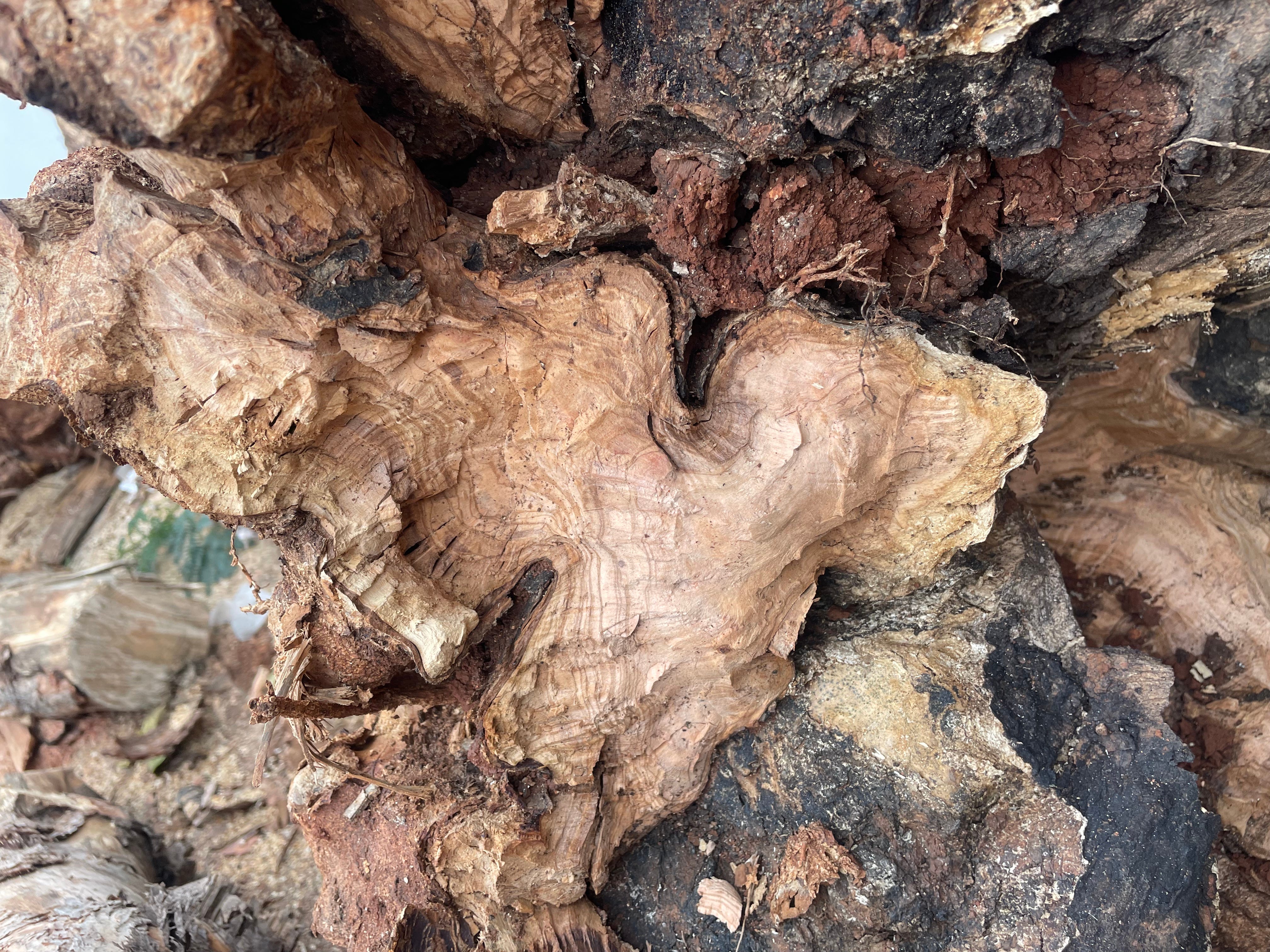
I shared photos of the logs on my Instagram story because the holiday Gaussian blur has returned and we have all gone to sleep once more. I wanted people, here and abroad, to be reminded that the destruction and thievery is ongoing.
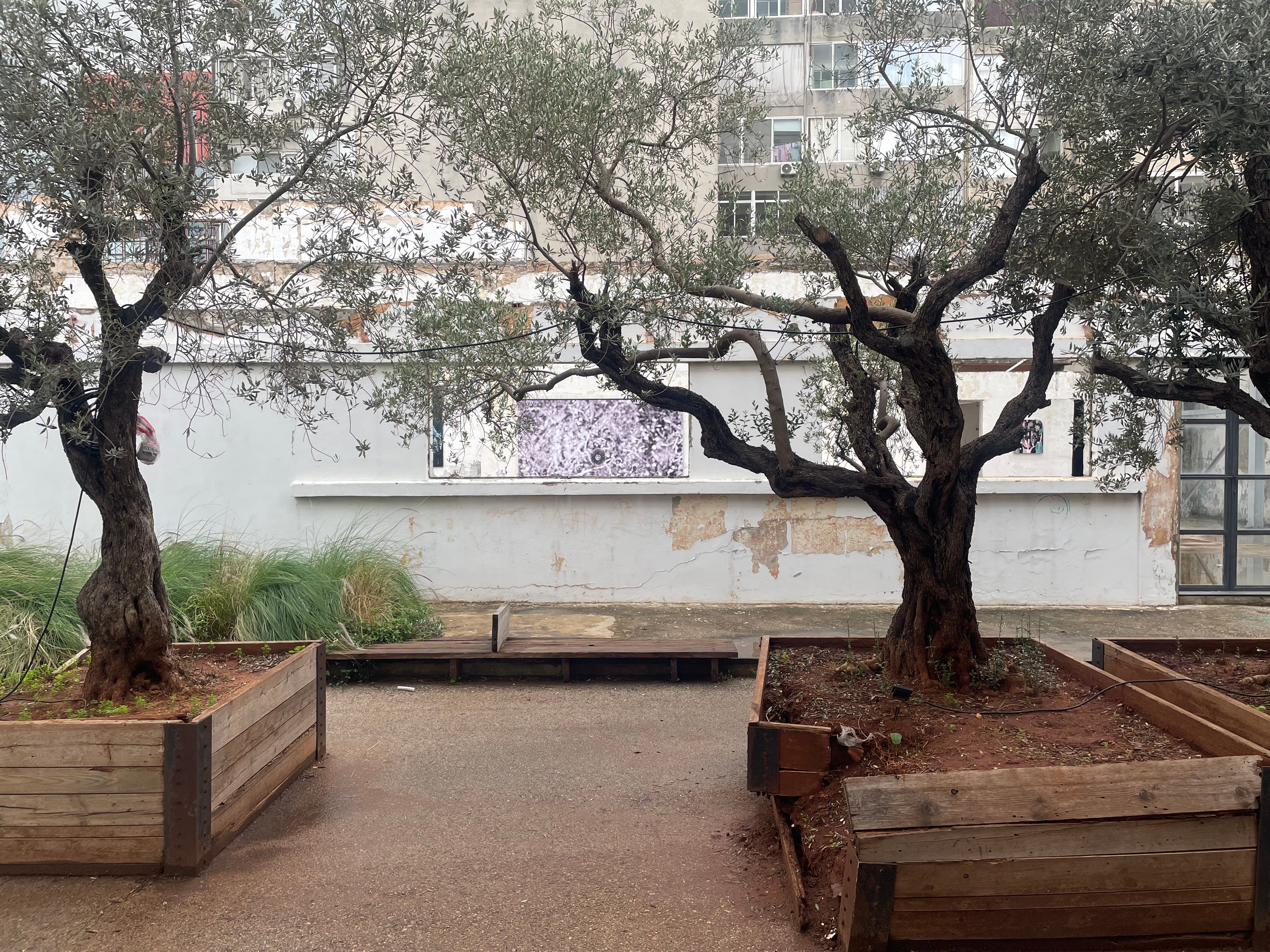
“The violence continues,” I typed over the image. I quickly regretted sharing anything after a Lebanese follower in Switzerland replied to my photo of an olive tree trunk. He said it should be turned into a nice table instead of firewood. I said that that’s the plan if the wood is in good condition. He responded saying he’d be happy to purchase one. I was stunned. It turned out that people could take these fragments and reduce them even further than furniture. They could be reshaped into a commodity, a sold souvenir. Another war has made me cling to inanimate objects that others only see as raw material.
I almost forgot! The Pope visited earlier this month and the flags that line the road to Baabda shifted from Hezb yellow to Vatican yellow. Lebanon became a functional country for 72 hours but the Israelis continued to hit the South regardless of his holiness. He did not visit the jnoub but he did pray by the port explosion site with the victims’ families. The entire visit felt orchestrated by foreign hands which turned our two most recent national tragedies into opposing offenses. The buzzing Israeli drones were back in the sky as soon as the Pope was too.
It’s been an emotional period now that I’m looking back. The chopped trees, my film’s debut, the return of university friends, the deepening admiration of new ones, the overall holiday intensity. Clashes of the past and the present.
It’s a Wonderful Life, right?
I wrote a blogpost about that film 10 years ago. I ended it with, “here’s to hoping 2016 brings more domestic adventure and ordinary success.” Pretty solid but I’m shaving it down this December: May 2026 be gentler with us all.

POPCORN IN MY TEETH
Nothing new worth noting in particular but I rewatched The Sound of Music at Metropolis for the first time in decades. It felt like I’d never seen it before and the Baroness’ perfect dig at Maria (“I'm sure you'll make a very fine nun”) will now be referenced forever. The lyrics of the songs are so wrong. A different era, indeed.
AT LEAST 5 LITTLE LINKS
I love this video of the room service team at The Plaza Hotel during the holidays. So many of them have been there for decades and I’m glad they get the spotlight here.
My fav, Lina Mounzer, writes in “The Disaster Correspondent” for Equator: “To write of Lebanon in English is to always be working with these cliches at the edge of one’s awareness. You write towards them, or against them; you write to subvert them or mock them or indulge them or skirt them altogether, but they are always there.”
From “Lebanon’s Olive Growers Struggle as Conflict and Climate Pressures Deepen” | Paolo DeAndreis for Olive Oil Times - I love when they refer to Israeli attacks as “ongoing military pressure in the south” and “near-war conditions.”
“This year so much changed in Lebanon - and yet so much more stayed the same” | Michael Young for The National
Decolonizing the Page: an online exhibition of a digitized collection of around 250 books, “contextualizing and enabling broad accessibility to little-known archives of Arab visual culture.”
PENNY FOR YOUR THOUGHTS